
Get in Touch
Close

Contacts

7700 W Parmer Ln
Suite B-175
Austin, TX 78729

info@xrcomm.com

6G Research: Myths and Technologies Shaping the Next

Blogs

The momentum behind 6G research is accelerating at an unprecedented pace. Early standardization activities, large-scale research programs, and increasing collaboration between academia and industry have already set the direction for what the next generation of wireless systems will require. At the heart of this evolution are disruptive technologies including AI-native physical and medium access control layers, non-terrestrial networks, integrated sensing and communications, and terahertz frequency operation. 

However, a critical gap exists between theoretical design work and real-time experimentation and prototyping. This divide has never mattered more. The technologies driving 6G research—frequency range 3 operation, artificial intelligence, non-terrestrial networks, integrated sensing and communication, innovations in low-power transceiver architectures, and energy-aware scheduling across radio access networks and devices—demand validation in realistic conditions. Beyond theoretical models and simulations, researchers need platforms that enable them to test, measure, and refine these concepts with the precision and scale that future wireless networks will require.

Why Traditional Prototyping Systems Limit 6G Progress

Legacy prototyping systems, designed for earlier wireless generations, are fundamentally ill-equipped for 6G research and are increasingly becoming bottlenecks. Researchers attempting to push the boundaries of 6G often find themselves fighting their hardware rather than innovating. The limitations are stark and multifaceted: bandwidth and channel constraints prevent researchers from adequately testing wideband 6G waveforms; the lack of precision calibration and synchronization makes multi-node experiments unreliable, undermining the reproducibility that scientific research demands.
Perhaps most critically, traditional systems lack AI and machine learning-ready platforms capable of meeting the stringent low-latency requirements essential for real-time decision-making in next-generation networks. Their inability to operate outside controlled laboratory environments further restricts the scope of experimentation. This matters because higher frequencies inherently suffer from greater propagation loss and introduce severe energy constraints. 6G will require fundamentally rethinking key aspects of the physical layer and network architecture—work that cannot be accomplished with yesterday’s tools.

Core Requirements for a Modern 6G Prototyping Platform

What are researchers actually searching for today? The requirements are clear. A modern 6G prototyping platform must deliver high-bandwidth, multi-channel radio frequency capabilities for wideband and terahertz experimentation. Real-time processing and low-latency data paths are non-negotiable for prototyping and characterizing real-time digital signal processing. 

At the RF level, platforms must support high-bandwidth, multi-channel operation, enabling experimentation with wideband signals, THz-adjacent frequencies, and complex antenna configurations. These RF capabilities must be matched by real-time processing and low-latency data paths, allowing researchers to prototype and characterize real-time DSP chains rather than relying on offline replay alone.

Reliable calibration and synchronization are essential for reproducibility, stable link quality, and meaningful comparison across experiments, particularly in multi-node and mMIMO scenarios. In parallel, native data labeling and analytics readiness accelerate machine learning workflows, enabling researchers to train and validate AI models to iterate faster.

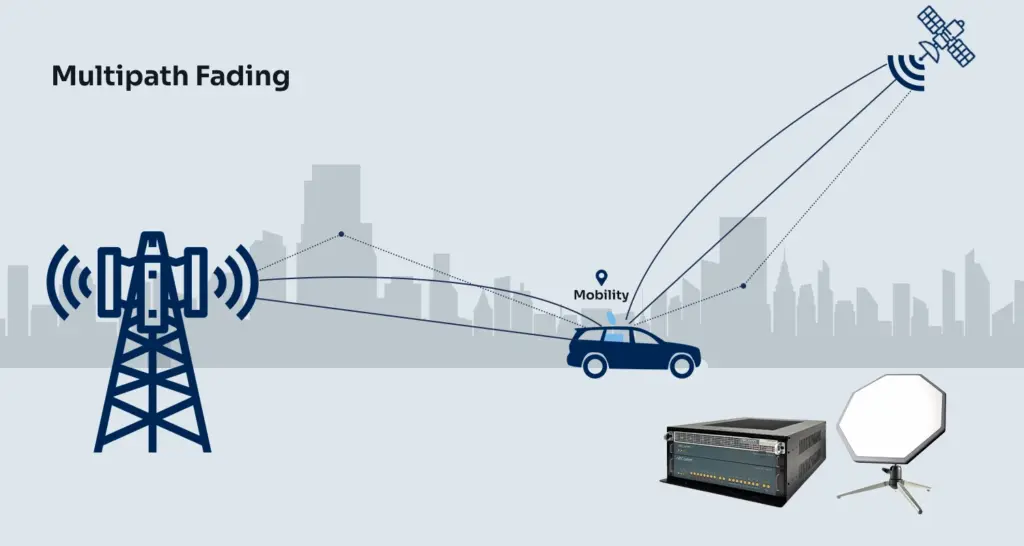
Field-deployable architecture is essential, allowing experiments to move beyond the lab into environments with multipath fading and mobility. Field deployability does not simply mean portability; it means operating reliably under multipath fading, mobility, and environmental dynamics without compromising measurement accuracy.
Finally, open and extensible application programming interfaces compatible with MATLAB, Python, machine learning frameworks, and open radio access network toolchains— OAI, Radisys, OCUDU, Linux Foundation, or custom-built solutions—ensure that platforms can integrate seamlessly into diverse research ecosystems.

Bridging Lab and Field: The Next Frontier in 6G Research

Field conditions represent the ultimate test of any wireless technology. Mobility-induced Doppler effects, non-terrestrial network elevation angles, millimeter-wave blockage, and dynamic interference patterns cannot be fully replicated in sterile laboratory environments. Field exposure is therefore essential, not as a final validation step, but as an integral part of the research and development process. The real-world phenomena are essential for validating 6G concepts and ensuring that theoretical innovations translate into practical deployments.

The rise of hybrid laboratory and field prototyping workflows reflects this reality. Researchers require methodologies that combine controlled lab testing with field validation to move experiments seamlessly between controlled laboratory environments and real-world deployments using the same hardware, software, and data pipelines allowing them to maintain experimental rigor while confronting the messiness of real-world wireless propagation. This approach accelerates the path from concept to deployment-ready technology.

Example Research Areas Unlocked by Next-Generation Platforms

When researchers are free from infrastructure limitations, they can focus on high-impact domains and collaborate across –domains, which is a a must for a successful 6G research and development. Advanced prototyping platforms unlock high-impact research domains that will define 6G. AI-native waveform and layer 1 and layer 2 design represent a paradigm shift, embedding intelligence directly into the radio interface. Terahertz and ultra-wideband waveform prototyping pushes the boundaries of spectral efficiency and data rates. Non-terrestrial networks and direct-to-device trials and planned deployments promise ubiquitous connectivity regardless of terrestrial infrastructure.
Reconfigurable intelligent surfaces and massive multiple-input multiple-output beamforming enable unprecedented control over the wireless environment. Integrated sensing and communications merge two traditionally separate functions into a unified framework. Open radio access network and real-time RAN intelligent controller research brings AI-optimized network management into reality. This holistic approach incorporates AI-native design, innovative spectrum strategies, and hardware-software co-optimization to meet performance, sustainability, and security objectives. Achieving this requires platforms specifically designed to prototype these diverse cross-domain and demanding technologies.

Choosing the Right Platform for 6G Prototyping

Selecting a platform is a strategic decision. A product-agnostic guide for researchers should prioritize the following questions:

  • Does the platform support real-time, multi-channel, high-bandwidth operation?
  • Is the platform capable of capturing the RF signals and analyze within one satellite pass without missing any RF data?
  • Is the calibration architecture robust and repeatable across experiments?
  • Can it run artificial intelligence and machine learning models in the loop for closed- loop optimization?
  • Is the platform open and extensible, or does it lock users into a single ecosystem?
  • Can it transition from benchtop work to distributed or field experiments without requiring entirely new infrastructure?
  • Can it scale up in both channel count and computing capabilities to support increasingly complex scenarios?
  • How readily does it support massive multiple-input multiple-output configurations?

These questions should guide the evaluation process, ensuring that the chosen platform aligns with both current research needs and future scalability requirements.

A New Era of Wireless Experimentation

6G innovation depends on prototyping platforms that merge RF fidelity, AI-native distributed computing, and field readiness into a single, coherent system. Researchers who adopt next-generation prototyping tools today position themselves to lead the breakthroughs that will ultimately shape the 6G standard.

6G represents far more than faster speeds and futuristic applications. It embodies a convergence of technologies and cross-domain knowledge that will make networks adaptive, perceptive, and sustainable. Realizing this vision requires a new breed of prototyping platforms—tools that enable rapid development and allow researchers to focus on innovation rather than wrestling with prototyping infrastructure.

FAQs

Why is real-world validation important for 6G technologies?
6G technologies are too complex. They depend on higher-frequency spectrum, AI-native operation, sensing, mobility, NTN, and ultra-low latency. Lab testing cannot replicate the unpredictable real-world interference, blockage, motion, and changing RF conditions. Field validation is required to ensure reliable performance under real-world conditions.
Traditional prototyping systems weren’t built for the complexity of 6G. They struggle with high bandwidth testing, accurate synchronization, and real-time AI processing. This makes experiments less reliable and limits testing in real-world conditions, slowing down innovation and making it harder to develop next-generation network technologies.
This allows a mobile phone or connected device to communicate directly with a satellite or other non-terrestrial platform, without the need for a nearby terrestrial cell tower. It extends coverage to remote areas, oceans, disaster zones, and underserved regions with the long-term aspiration of supporting higher-throughput broadband.
Many test workflows still use AI after the fact: capture data first, analyze it later, then manually interpret results. XRComm’s Native AI brings intelligence into the test and measurement data path itself. This enables real-time data labeling and analytics, allowing the platform to identify anomalies and provide signal performance insights while the test is running, not days later.
6G research must move beyond “sterile” labs because many 6G signals, especially sub-THz and THz signals, can behave very differently in the real world. Buildings, trees, rain, vehicles, movement, and interference can weaken, block, or distort the signal. Field-deployable hardware allows researchers to test these signals in “messy,” unpredictable environments, ensuring the technology actually works in the real world before millions are spent on a failed deployment.